Why Is My Car AC Blowing Hot Air? Common Causes and Fixes
There’s nothing worse than turning on your car’s air conditioning on a sweltering summer day, only to be hit with a blast of hot air instead of that refreshing cool breeze you were expecting. If you’re dealing with this frustrating problem, you’re not alone. A malfunctioning car AC is one of the most common complaints mechanics hear, especially during the warmer months here in Colorado.
The good news? Understanding why your AC is blowing hot air can help you determine whether you’re dealing with a quick fix or something that needs professional attention. Let’s break down the most common causes and what you can do about them.
How Your Car’s AC System Actually Works
Before we dive into what’s going wrong, it helps to understand how your vehicle’s air conditioning system works in the first place. Your car’s AC doesn’t actually “create” cold air—instead, it removes heat and humidity from the air inside your cabin.
The system relies on refrigerant, a special chemical that alternates between liquid and gas states. As this refrigerant circulates through the system, it absorbs heat from your car’s interior and releases it outside. The compressor acts as the heart of the system, pumping refrigerant through a network of components including the condenser, evaporator, and expansion valve.
When everything’s working properly, this process repeats continuously, keeping your cabin comfortable even when it’s scorching outside. But when one component fails or the system loses refrigerant, the entire cooling process breaks down.
Low Refrigerant: The Most Common Culprit
The single most common reason for hot air from your vents is low refrigerant levels. Your AC system is a sealed unit, meaning refrigerant shouldn’t escape under normal circumstances. However, over time, even the best-maintained systems can develop small leaks through hoses, seals, O-rings, or connections.
When refrigerant levels drop too low, the system can’t effectively absorb and remove heat from your cabin. You might notice the AC working intermittently—blowing cold for a few minutes, then switching to warm air. If you spot an oily film or residue around AC components under your hood, that’s a telltale sign of a refrigerant leak.
Some drivers wonder if they can simply add refrigerant themselves. While DIY recharge kits are available at auto parts stores for around $40 to $60, this approach only provides a temporary fix if you have a leak. Without addressing the underlying problem, you’ll find yourself needing another recharge in a few months. Professional AC service typically costs between $150 and $300 but includes leak detection and proper system evacuation—something DIY kits can’t provide.
Compressor Failure: When the Heart Stops Pumping
Think of your AC compressor as the heart of the cooling system. This component pressurizes and circulates refrigerant throughout the entire system. When it fails, your AC simply can’t function, no matter how much refrigerant you have.
Compressor problems often develop after long periods of inactivity. If you haven’t used your AC all winter, the compressor can seize up or its internal components can wear out due to lack of lubrication. Many newer vehicles actually run the compressor year-round by activating it when you use the defrost setting, which helps prevent this issue.
How can you tell if your compressor is failing? Listen for unusual noises when you turn on the AC—grinding, squealing, or rattling sounds often indicate worn bearings or a failing clutch. The compressor clutch should engage with an audible click when you activate the AC. If you only see the outside pulley spinning without the clutch engaging, your compressor likely needs replacement.
Compressor replacement isn’t cheap. Professional repairs typically run between $800 and $1,500, including parts and labor. The exact cost depends on your vehicle’s make and model, but it’s generally one of the more expensive AC repairs you might face.
Condenser Problems: Can’t Release the Heat
Your condenser sits at the front of your vehicle, right behind the grille. Its job is to release the heat that the refrigerant absorbed from your cabin. As you drive, air flows through the grille and across the condenser, cooling the hot refrigerant so it can cycle back through the system.
The condenser’s location makes it vulnerable to damage from road debris, leaves, bugs, and dirt. If the condenser becomes clogged or blocked, it can’t effectively cool the refrigerant. You might notice this problem more when you’re sitting in traffic, where airflow is limited, or during particularly hot days when the system is working overtime.
Physical damage from minor collisions or road debris can also puncture the condenser, causing refrigerant leaks. Look for bent fins, visible debris buildup, or damage to the condenser fan. Sometimes a thorough cleaning is all that’s needed, but damaged condensers typically require replacement.

Electrical Issues: The Hidden Troublemakers
Modern AC systems rely on a complex network of electrical components—fuses, relays, sensors, and wiring—all working together. A single blown fuse or corroded connection can prevent your entire system from functioning properly.
Electrical problems can be particularly tricky to diagnose because the symptoms often mimic other issues. Your AC might not turn on at all, or it might work intermittently. Sometimes the compressor won’t engage even though everything else seems fine. In other cases, you might notice the system working harder than it should, putting extra strain on your engine.
Diagnosing electrical issues requires specialized diagnostic equipment that most DIYers don’t have access to. A professional technician can quickly identify whether a blown fuse, faulty relay, or damaged wiring is causing your hot air problem. Electrical repairs are usually less expensive than major component replacements, often costing between $100 and $400 depending on the specific issue.
Clogged Cabin Air Filter: The Simple Fix
Here’s some good news—sometimes the solution is incredibly simple. Your cabin air filter traps dust, pollen, and debris before air enters your passenger compartment. Over time, this filter becomes clogged, restricting airflow and reducing your AC’s cooling power.
A severely clogged cabin air filter can make it seem like your AC is blowing hot air, when really it’s just not pushing enough air through the vents. You might also notice musty smells, excessive dust inside your car, or unusually loud noises from the ventilation system.
The solution? Replace your cabin air filter. Most manufacturers recommend changing it every 12,000 to 15,000 miles, or once a year, whichever comes first. If you drive on dusty roads or in high-pollution areas, you might need to replace it more frequently.
This is one of the easiest DIY repairs you can do. Cabin air filters typically cost $15 to $35, and most can be replaced in just a few minutes without any tools. Your owner’s manual will show you exactly where to find the filter—it’s usually behind the glove box or under the dashboard.
Blocked or Damaged Expansion Valve
The expansion valve controls refrigerant flow into the evaporator, regulating pressure and temperature. When this small but critical component gets clogged or fails, it disrupts the entire cooling process. You might notice inconsistent cooling—sometimes cold, sometimes warm—or a complete lack of cool air.
Expansion valve problems often develop when moisture or debris enters the AC system. The valve can freeze or get blocked, preventing proper refrigerant flow. Unfortunately, this isn’t something you can fix yourself. A trained technician needs to diagnose the issue, evacuate the system, replace the valve, and properly recharge the refrigerant.
When to DIY vs. When to Call a Professional
Some AC issues are straightforward enough for DIY fixes, while others absolutely require professional expertise. Here’s how to know the difference.
You Can Probably Handle:
- Replacing a clogged cabin air filter
- Adding refrigerant if you’re certain you have a very minor, slow leak
- Cleaning visible debris from the condenser exterior
- Checking and replacing a blown AC fuse
You Should Leave to the Pros:
- Diagnosing and repairing refrigerant leaks
- Compressor replacement or repair
- Electrical system diagnosis
- Evacuating and properly recharging the AC system
- Replacing the condenser, evaporator, or expansion valve
Remember, AC systems contain refrigerant that’s harmful to the environment and requires special handling. Many states have regulations about who can purchase refrigerant and work on AC systems. Plus, improperly servicing your AC can cause expensive damage that turns a simple fix into a major repair bill.
Preventing AC Problems Before They Start
You can avoid many AC problems with proper maintenance and a few smart habits:
Run Your AC Regularly: Even during winter, turn on your AC for a few minutes each month. This keeps the compressor lubricated and prevents seals from drying out and cracking.
Get Annual Inspections: Have your AC system professionally inspected at least once a year, preferably in spring before you need it most. Technicians can catch small leaks and worn components before they fail completely.
Replace Your Cabin Air Filter: Don’t skip this simple maintenance task. A clean filter improves cooling efficiency and protects your AC system from dust and debris.
Keep Your Condenser Clean: Periodically check the front of your vehicle for leaves, bugs, and debris blocking the condenser. A quick rinse with a garden hose can prevent cooling problems.
Address Problems Quickly: If you notice any change in your AC’s performance—weaker airflow, strange noises, or inconsistent cooling—get it checked out right away. Small problems are always cheaper to fix than major failures.
What to Expect When You Visit a Mechanic
If you decide professional help is needed, here’s what typically happens during an AC service appointment.
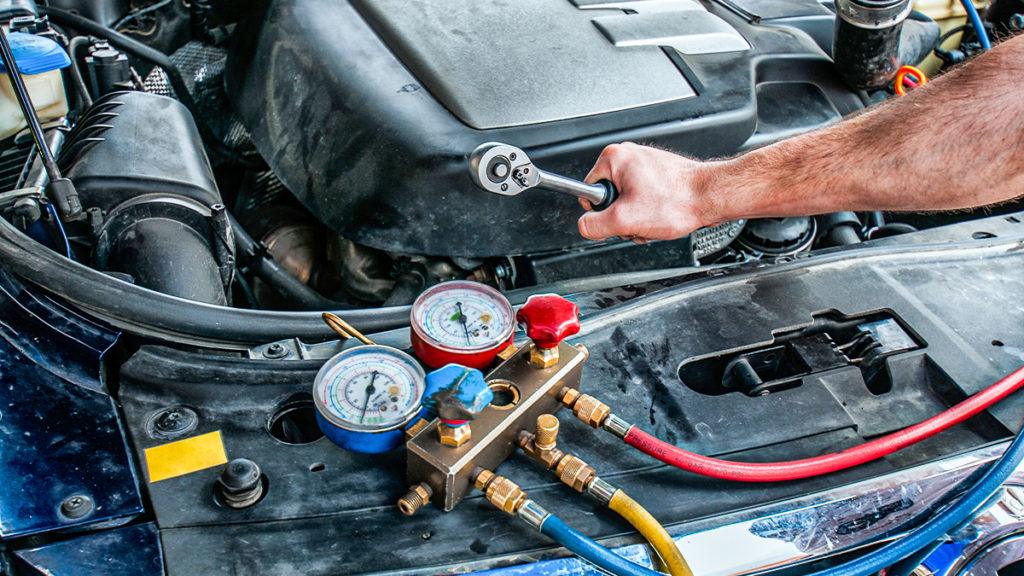
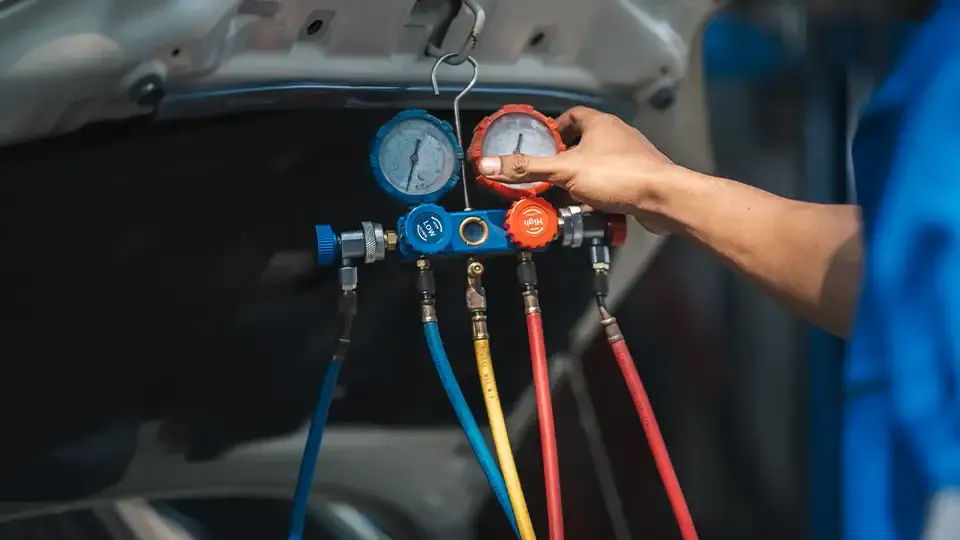
First, the technician will perform a visual inspection of all AC components, checking for obvious damage, leaks, or worn parts. They’ll test the system’s performance, measuring vent temperature and checking refrigerant pressure levels.
If they suspect a leak, they might use specialized detection equipment—either electronic leak detectors or UV dye that shows up under a black light. This helps pinpoint exactly where refrigerant is escaping.
For a complete AC service, the technician will evacuate the old refrigerant, check the system for leaks under vacuum, replace any worn or damaged components, and recharge the system with the exact amount of refrigerant your vehicle requires. This process usually takes one to three hours depending on what repairs are needed.
How Much Will AC Repairs Cost?
AC repair costs vary widely depending on what’s wrong. Here’s a general breakdown of what you might expect to pay:
- Basic recharge (no leaks): $150-$300
- Refrigerant leak repair: $200-$600
- Compressor replacement: $800-$1,500
- Condenser replacement: $400-$900
- Electrical repairs: $100-$400
- Expansion valve replacement: $200-$500
These are rough estimates. Your actual costs will depend on your vehicle’s make and model, labor rates in your area, and whether you need additional parts replaced. Some luxury vehicles or cars with complex AC systems can cost significantly more.
The good news? Investing in proper repairs now saves you money in the long run. A well-maintained AC system lasts for years, while repeatedly adding refrigerant to a leaking system wastes money and harms the environment.
Don’t Ignore a Failing AC
Beyond comfort, a functioning AC serves important safety purposes. It removes humidity from your windshield during rain, preventing fog that obscures your vision. On extremely hot days, interior temperatures can quickly reach dangerous levels—over 115 degrees even when it’s only 70 degrees outside, according to the National Highway Traffic Safety Administration.
If you have children, elderly passengers, or pets, a working AC isn’t just about comfort—it’s about safety. Heat exhaustion and heat stroke can develop quickly in hot vehicles.
Get Your AC Fixed in Rocky Ford
Dealing with hot air from your car’s AC is frustrating, but now you understand the common causes and know when to tackle the problem yourself versus calling in the experts. Whether you’re dealing with low refrigerant, a failing compressor, or something as simple as a clogged cabin filter, addressing the issue quickly will save you money and keep you comfortable all summer long.
If your car’s AC is blowing hot air and you need professional diagnosis and repair, Rocky Ford Discount Tire has you covered. Our ASE-certified master technicians have the expertise and diagnostic equipment to quickly identify your AC problem and get you back to cool, comfortable driving. We offer comprehensive air conditioning service and repair for all makes and models, backed by our 24-month/24,000-mile warranty.
Explore our mechanical services to learn more about our complete auto repair capabilities, or give us a call today at (719) 254-3391 to schedule your AC diagnosis. We’re conveniently located at 1601 Elm Ave in Rocky Ford, and we’ve been keeping Arkansas Valley drivers cool since 1972.