
Dashboard Warning Lights On? Here’s What Your Car’s Electrical System Is Telling You
A warning light flashing on your dashboard is your car’s way of raising its hand. Ignore it long enough and a small electrical issue can turn into a stranded car, a dead battery, or a repair bill that didn’t need to happen. Understanding what these signals mean is the first step to catching problems before they get expensive.
Your car’s electrical system does more than power the radio and headlights. It starts the engine, runs the fuel injectors, keeps the safety sensors talking to each other, and monitors dozens of components in real time. When something in that system is off, the dashboard is usually the first place it shows up.
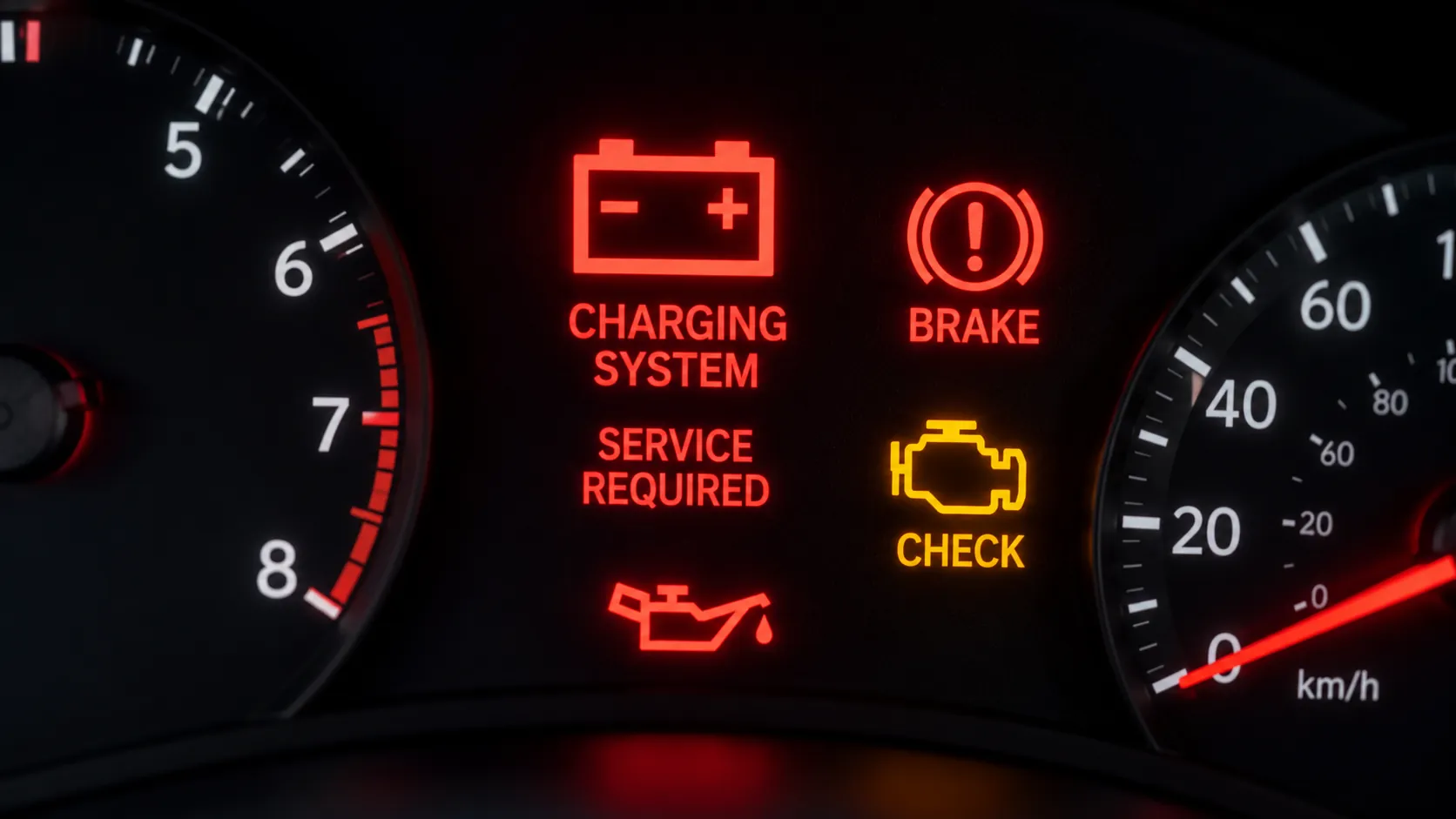
Common Warning Lights and What They Actually Mean
Not every light on your dashboard points to the same problem, and not every light means pull over immediately. Here’s a breakdown of the ones tied most directly to your car’s electrical system.
Battery warning light. This is the most direct electrical alert you’ll get. It usually means your battery isn’t charging properly, which points to either the battery itself, the alternator, or a bad connection somewhere in between. If this light comes on while you’re driving, get it checked before the car loses power entirely.
Check engine light. This one is broader and can relate to the engine, emissions, or electrical sensors feeding data to the car’s computer. A loose wire, a failing sensor, or a corroded connector can all trigger it. It doesn’t always mean something is badly wrong, but it does mean something needs a diagnostic scan to confirm.
ABS or traction control light. These systems rely on sensors and wiring throughout the car. A flickering or steady ABS light often traces back to a wiring issue or a sensor that’s lost connection, not a mechanical brake failure.
Airbag or SRS light. This is tied to sensors and wiring under the seats, in the doors, and around the steering column. It’s part of your car’s electrical system even though it doesn’t feel like it, and it’s not one to ignore since it affects a safety feature you hope you never need.
If more than one light comes on at once, especially alongside dimming lights or a sluggish start, that’s usually a stronger signal of an electrical system problem rather than a single sensor glitch.
Flickering or Dim Lights: An Early Sign Worth Noticing
Before a warning light ever appears, your headlights and interior lights often give the first hint that something’s wrong. Flickering headlights, dim dashboard lighting, or interior lights that dim when you turn on the AC or radio usually point to a charging system issue.
This typically comes down to one of three things: a weakening alternator that can’t keep up with the car’s electrical demand, a battery that’s losing its ability to hold a charge, or a corroded connection that’s restricting current flow. None of these fix themselves, and all three tend to get worse the longer they’re left alone.
How Your Alternator Keeps the Whole System Running
The alternator is easy to overlook until it fails, but it’s doing constant work every time the engine is running. It charges the battery and powers the car’s electrical system while you drive, which means the battery is really only used to start the engine and to cover brief gaps in demand.
A healthy alternator typically lasts somewhere between 80,000 and 150,000 miles, though heat, humidity, and heavy electrical use from things like aftermarket stereos or accessory lighting can shorten that lifespan. As an alternator starts to wear out, it doesn’t always fail all at once. More often, output drops gradually, which is why the early signs (dimming lights, a battery that seems to run down faster than it should, slow accessory function) can be subtle before they turn into a no-start situation.
This gradual decline is also why a car can pass a basic visual inspection and still have a failing alternator. Testing output under load is the only reliable way to catch it before it leaves you stranded.
Difficulty Starting the Car
A slow crank, a clicking sound, or a car that needs multiple tries to start are classic symptoms of an electrical system under strain. The starter, battery, and alternator work together every time you turn the key, and a weakness in any one of them shows up here first.
A battery that’s near the end of its life will struggle in cold weather especially. A failing starter motor might click without turning the engine over. A worn alternator might get you started today but leave you stuck tomorrow, since it’s not properly recharging the battery between drives. This is exactly why an accurate diagnosis matters. Guessing which component is at fault often leads to replacing the wrong part.
Blown Fuses and Sudden Power Loss
If your radio, power windows, or interior lights suddenly stop working, a blown fuse is often the reason. Fuses are designed to blow to protect the rest of the electrical system, so a single blown fuse usually isn’t an emergency. But if fuses keep blowing repeatedly, that’s a sign of a deeper wiring issue, like a short circuit or damaged wiring harness, that needs to be traced and repaired rather than just patched with a new fuse.
Sudden, complete loss of electrical power while driving is more serious. This can point to a major connection failure, a dying alternator, or a battery that’s failed outright. If this happens, it’s worth getting the car looked at as soon as possible rather than continuing to drive on it.
Burning Smells: Don’t Wait This One Out
A burning smell tied to electrical components is one of the few signs that calls for immediate attention. It can mean overheated wiring, a failing component, or an electrical short, any of which carries fire risk. If you notice this smell, especially alongside smoke or a warning light, it’s time to stop driving and have the car inspected right away.

Why Accurate Diagnosis Matters More Than Guesswork
The battery, alternator, and starter can all produce overlapping symptoms. A slow start could be a weak battery, a failing alternator, or a worn starter. Dim headlights could be a battery issue or a wiring problem further down the line. This overlap is exactly why so many electrical repairs go wrong when they’re based on guesswork. Replacing a battery when the real issue is the alternator just means you’ll be back in the same spot within weeks.
A proper diagnosis uses testing equipment to check battery voltage and health, alternator output, starter draw, and the wiring and sensors connecting everything. This traces the problem to its actual source instead of throwing parts at the issue and hoping one of them fixes it.
What Happens During a Professional Electrical Diagnostic
Most electrical diagnostics follow a similar process regardless of the symptom that brought the car in. A technician will typically start by checking battery voltage both at rest and while cranking, since a battery can read fine sitting still and still fail under load. Next comes alternator output testing, usually with the engine running and accessories on, to see whether the charging system is keeping up with demand. Starter draw gets tested separately, since a starter pulling too much current is often the reason behind a slow or repeated crank. From there, a technician traces wiring and connectors related to the specific symptom, checking for corrosion, loose grounds, or damaged insulation that could be interrupting the flow of power. This step by step approach is what separates an accurate diagnosis from a guess, and it’s also what prevents a customer from paying for a new alternator when the actual problem was a corroded ground wire the whole time.
Sensors and the Modern Car’s Electrical Network
Older cars had relatively simple electrical systems. Today’s vehicles run on a network of sensors constantly reporting to onboard computers, covering everything from engine performance to safety systems. When a sensor malfunctions or loses connection, it can trigger warning lights that seem unrelated to what’s actually wrong. This is part of why modern electrical diagnostics involve more than a visual inspection. It takes the right tools to read what the car’s computer is actually reporting and match that to the real cause.
How Cold Weather Puts Extra Strain on Your Electrical System
Cold temperatures are one of the most common triggers for electrical problems to surface. Cold thickens engine oil, which makes the starter work harder to turn the engine over, and it also reduces a battery’s ability to deliver current at the exact moment it needs to work hardest. A battery that’s already weakening might start fine all summer and then fail the first cold morning of the year.
This is why so many no-start calls come in during the first real cold snap. The battery didn’t fail overnight. It was already marginal, and the cold simply pushed it past the point it could no longer compensate for. Getting a battery and charging system tested before winter is a simple way to catch a weak component before it leaves you stuck in a parking lot.
The Real Cost of Waiting
Cost is often the reason people put off getting a warning light checked, but waiting rarely saves money in the long run. A battery caught early might just need testing and a terminal cleaning. Left alone, it can strand a car and take other components down with it, since a dying battery forces the alternator and starter to work harder than they’re built for. The same goes for wiring issues. A single exposed wire is a quick fix. Left unaddressed, it can lead to a short that damages a sensor, a fuse box, or a component that costs far more to replace than the wire ever would have. The earlier an electrical issue is caught, the smaller and cheaper the fix tends to be.
Simple Habits That Help Prevent Electrical Problems
A few basic habits go a long way toward avoiding electrical issues before they start:
- Keep battery terminals clean and free of corrosion, since buildup restricts current flow and can mimic the symptoms of a failing battery or alternator
- Have your battery and charging system tested at least once a year, especially before winter
- Avoid leaving accessories like headlights or interior lights running when the engine isn’t on
- Address a single blown fuse right away rather than waiting to see if it happens again
- Pay attention to small changes like dimmer lights or a slower crank, since these are usually the earliest signals a bigger issue is building
It’s also worth remembering that not every electrical fix has to wait until something fails completely. A quick check during a routine service, especially before a long road trip or the start of winter, can catch a weakening battery or a corroded connection before it ever produces a warning light. Prevention is almost always the cheaper and less stressful route compared to dealing with a car that won’t start in a parking lot or on the side of the road.
When to Get Your Car’s Electrical System Checked
A few dashboard lights blinking on and off occasionally might not be urgent. But you should get your car checked promptly if you notice any of the following:
- A warning light that stays on, especially the battery or check engine light
- Headlights or interior lights that flicker or dim noticeably
- The car struggling to start or cranking slowly
- Fuses that blow repeatedly
- Any burning smell, with or without visible smoke
- A sudden and complete loss of electrical power while driving
Catching these early usually means a smaller repair. Waiting until the car won’t start at all, or until wiring damage spreads, usually means a bigger one.
The Bottom Line
Your dashboard is designed to tell you something before it becomes a real problem. A flickering light, a slow start, or a warning icon that won’t go away are all your car’s electrical system asking for attention. The sooner these signs are diagnosed properly, the less likely you are to end up stranded or facing a repair that could have been caught early.
If you’re seeing any of these warning signs, check out our electrical system diagnosis and repair services for accurate testing of your battery, alternator, starter, and wiring, or call us at (719) 254-3391 to get your car checked before a small issue turns into an emergency.